

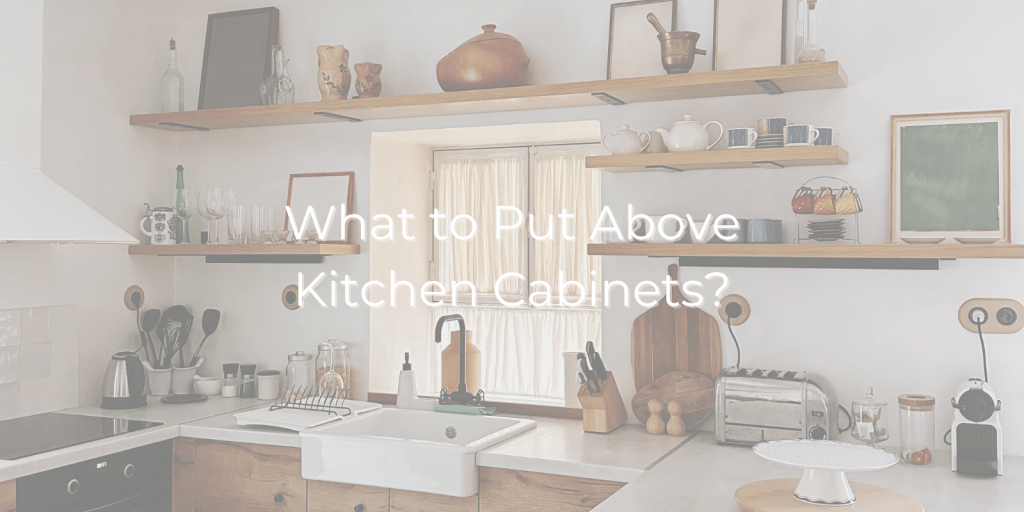
That open gap between your upper cabinets and ceiling can make a kitchen feel unfinished, but filling every inch with decor is not always the answer. If you are wondering what to put above kitchen cabinets, start by looking at the height of the gap, how much storage you actually need, and the overall style of your kitchen. Sometimes baskets or pottery work beautifully. In other kitchens, leaving the area clean or extending the cabinetry creates a much better result.
The goal should be intentional design, not simply finding things to fill empty space.
A Few Ideas to Consider Before You Start Decorating
- Keep narrow cabinet gaps simple instead of forcing small decor into them.
- Use larger items rather than many small pieces that create visual clutter.
- Choose storage only for lightweight things you do not need every day.
- Coordinate colors and materials with the rest of your kitchen design.
- Remember that cabinet tops collect cooking residue and dust.
- If the space feels permanently awkward, consider a cabinetry or remodeling solution instead of more decor.
Match the Solution to the Size of the Cabinet Gap
Before deciding what to put above kitchen cabinets, measure the actual distance between the cabinet top and ceiling. Scale matters more than most homeowners expect.
| Cabinet Gap | Usually Works Best |
|---|---|
| Less than 6 inches | Leave clean or finish with molding |
| About 6 to 18 inches | Simple decor, baskets, pottery, or greenery |
| More than 18 inches | Larger displays, storage, built-ins, or taller cabinets |
These measurements are practical design guidelines rather than strict rules. Ceiling height, cabinet proportions, lighting, and the size of the kitchen all affect what looks balanced.
An awkward cabinet gap can look even more noticeable when several tiny items are lined across the top. A few substantial pieces usually create a calmer look.
Use Baskets When You Need Extra Kitchen Storage
Decorative baskets are one of the easiest ways to combine storage with above kitchen cabinet decor.
Large baskets or boxes/containers can hold lightweight items you use occasionally, such as seasonal linens, specialty serving pieces, or party supplies. Choose two or three baskets with similar materials or colors instead of mixing many unrelated styles.
For practical storage, consider:
- Woven baskets in warm or traditional kitchens
- Simple wood boxes for rustic interiors
- Matching containers for more contemporary spaces
- Lidded storage when dust protection matters
Avoid storing heavy cookware, breakable appliances, or anything you need every week. Reaching above cabinets repeatedly with a step stool is rarely convenient.
Decorate With Pottery, Art, and Personal Pieces
If you have enough height, pottery can add shape without overwhelming the room. White pottery works especially well when the kitchen already has several colors or textures because it adds interest without creating additional visual noise.
You can also use:
- Large ceramic bowls
- One or two sculptural vases
- Framed artwork
- Vintage kitchen pieces
- Carefully selected photos
- A decorative tray or cutting board
When decorating with a photo or framed wall decor, make sure it is large enough to be visible from normal standing height. Tiny frames can disappear visually once they are placed several feet above eye level.
One useful rule is to group items in small arrangements rather than creating a continuous line across every cabinet.
Can You Put Plants Above Kitchen Cabinets?
Yes, but choose plants based on the light and accessibility of the space.
Real plants can soften hard cabinet lines, but watering something several feet above the floor becomes inconvenient quickly. Heat, limited natural light, and kitchen grease can also make some locations unsuitable.
If maintenance is a concern, realistic artificial plants or a small amount of greenery can achieve a similar effect. Older decorating ideas sometimes relied heavily on fake leaf bushes across every cabinet. A more restrained approach usually feels cleaner today.
Use one trailing plant or a few coordinated plants rather than creating a dense strip of greenery.
Sometimes the Best Choice Is to Leave the Space Empty
Not every empty space needs an object.
In a clean contemporary kitchen, leaving the area above cabinets open can allow the cabinetry, backsplash, countertops, and lighting to become the main design features. Adding decor simply because the area exists can make the room feel busier.
This is particularly important in smaller kitchens where too many items above eye level can make the ceiling feel lower.
If you are deciding what to put above kitchen cabinets and every decorating idea seems slightly forced, that may be a sign that nothing needs to go there.
When the Cabinet Gap Is Really a Design Problem
Decorating cannot fix every cabinet proportion.
If the gap looks disconnected from the rest of the kitchen, the stronger long-term solution may be taller upper cabinets, stacked cabinetry, crown molding, built-in storage, or a redesigned cabinet layout. Current kitchen design increasingly treats cabinetry as part of the architecture rather than simply adding decorative objects to an unused gap.
Extending upper cabinets toward the ceiling can also create storage for items used only a few times each year. Another option is carrying backsplash material, paint, or architectural trim upward so the space feels intentional without adding more objects.
This becomes especially valuable during a full kitchen remodel because cabinet dimensions, ceiling height, lighting, storage needs, and appliance placement can all be planned together.
Create a Kitchen That Works Beyond the Decor
At S&E Remodeling Inc., kitchen planning starts with what is not working in the existing space. That may be limited cabinet storage, an inefficient layout, poor lighting, dated finishes, or cabinetry that does not fit the proportions of the room. The company handles kitchen projects ranging from targeted updates to more extensive renovations involving custom cabinets, built-in storage, countertops, backsplash, flooring, plumbing, electrical work, and layout changes.
So, if you are still wondering what to put above kitchen cabinets because the gap itself feels wrong, it may be worth looking beyond decor. S&E Remodeling can evaluate how the existing cabinets relate to the ceiling and the rest of the kitchen, then develop a design that improves both appearance and everyday function. The team can also provide a 3D model during the planning process so homeowners can better understand how proposed changes will look before construction begins.
Why Homeowners Choose S&E Remodeling
- Family-owned remodeling company serving Western Washington since 2018
- Washington contractor license SEREMRI822BE
- Kitchen remodeling, custom cabinetry, storage, flooring, tile, plumbing, electrical, and broader renovation capabilities
- 3D kitchen design visualization available during project planning
- Project coordination and communication throughout construction
- Daily jobsite cleanup and attention to protecting the home during construction
Talk With S&E Remodeling About Your Kitchen
Phone: (253) 364-4458
Email: [email protected]
Service area: Western Washington and the Puget Sound region, including Tacoma, Pierce County, King County, and select communities in Snohomish and Thurston counties.
If your cabinet gap is part of a larger storage or kitchen design problem, contact S&E Remodeling to discuss a kitchen remodel and get a project-specific recommendation.
Frequently Asked Questions
Is decorating above kitchen cabinets outdated?
No, but heavily filling the entire cabinet top can make a kitchen feel dated or cluttered.
Larger, carefully selected decor items or functional storage generally create a cleaner result than many small accessories.
How do I keep decor above cabinets from getting greasy?
Choose smooth, easy-to-wipe items and clean them periodically rather than using porous or highly detailed decor.
Cabinet tops near cooking areas naturally collect airborne grease and dust faster than ordinary shelves.
Can I store dishes above my upper cabinets?
You can store lightweight, rarely used pieces there, but everyday dishes are usually better kept somewhere easier to reach.
Use stable containers and avoid putting valuable or fragile items where they are difficult to access safely.
Should kitchen cabinets reach the ceiling?
They do not have to, but ceiling-height cabinets can create a more integrated appearance and provide additional storage.
Whether they make sense depends on ceiling height, kitchen proportions, budget, accessibility, and the existing cabinet layout.
Can crown molding cover the gap above kitchen cabinets?
Crown molding can visually reduce a smaller gap and create a more finished transition between cabinetry and ceiling.
For larger gaps, stacked cabinets, additional cabinetry, or another architectural solution may look more proportional.